How to Design a Family Crest Ring?
Designing a family crest ring involves researching your authentic coat of arms, selecting the correct heraldic symbols, choosing a ring style and metal, and working with a manufacturer who engraves and finishes each piece by hand. When done correctly, the result is a durable heirloom that accurately represents your lineage and family identity.
Understanding What a Family Crest Ring Represents
A family crest ring, also called a heraldic or coat of arms ring, represents lineage, honor, and identity. Historically, these rings were used to seal documents, therefore accuracy mattered as much as craftsmanship. Today, the meaning remains, but the function has evolved into personal heritage jewelry.
However, not every crest found online is legitimate. Many mass-market sellers reuse generic designs. As a result, proper verification is essential before moving forward. A well-designed ring starts with historical truth, not decorative guesswork.
Researching and Verifying Your Family Crest
Before any design work begins, research your surname through reputable heraldic records. For example, European coats of arms were traditionally granted to individuals, not surnames. Therefore, multiple versions may exist depending on region and era.
Meanwhile, a professional jeweler can help interpret shield elements, animals, colors, and mottos. Each symbol carries meaning, and misplacing one can change the story entirely. Accuracy at this stage prevents expensive redesigns later.
Family Crest Ring Design Process Overview
| Design Stage | What Happens | Why It Matters |
|---|---|---|
| Crest Verification | Confirm historical accuracy of coat of arms | Prevents incorrect or generic designs |
| Style Selection | Choose oval, antique, old-style, or new-style | Affects visual impact and sealing function |
| Orientation Choice | Decide standard or reversed engraving | Determines traditional vs modern use |
| Metal Selection | Choose gold karat, silver, or alternative metals | Impacts durability and longevity |
| Hand Engraving & Finish | Ring is crafted and finished individually | Ensures heirloom-level quality |
| Quality Assurance | Final inspection and warranty | Protects long-term value |
Choosing Between Old Style and New Style Engraving
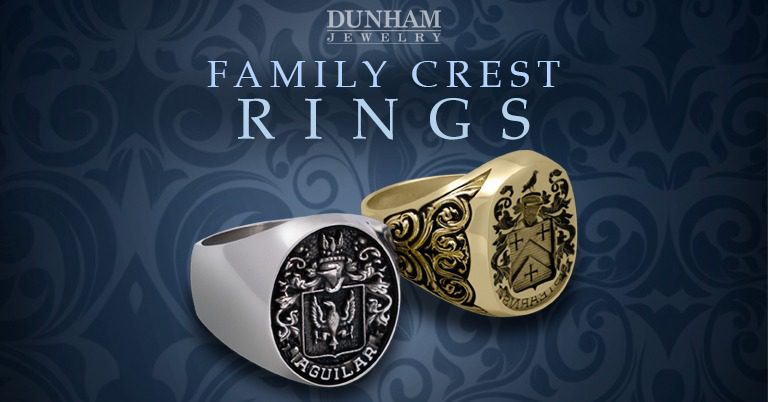
Old-style family crest rings feature reversed imagery. Consequently, when pressed into wax, the seal appears correctly oriented. This method follows historical tradition and is favored by purists and collectors.
In contrast, new-style engraving shows the image in the correct visual orientation on the ring itself. However, it stamps a reversed seal. While less traditional, this option is often preferred for daily wear and visual clarity.
Selecting Oval vs Antique Ring Shapes
Oval styles maintain a smooth, classic silhouette and are ideal for detailed crests with balanced symmetry. Additionally, oval rings tend to wear comfortably and suit both modern and traditional tastes.
Antique styles, by contrast, feature a rectangular face with softened corners. This shape offers a bold, historic look and works well for complex heraldic shields. Therefore, the choice depends on personal style and symbolic emphasis.
Selecting the Right Metal for Longevity
Metal choice directly affects how your family crest ring ages. High-karat gold offers richness but is softer, while lower karats increase durability. Therefore, many heirloom rings balance beauty with strength using carefully alloyed gold.
Factory-direct manufacturers who alloy their own metals maintain tighter quality control. As a result, the ring meets industry standards and holds up to decades of wear without losing definition in the engraving.
Why Handcrafting Matters in Crest Rings
Machine-made crest rings often lack depth and clarity. In contrast, hand-finished rings preserve fine heraldic details that define authenticity. Moreover, handcrafted processes allow subtle adjustments that machines cannot replicate.
At Dunham Jewelry Manufacturing, Inc., each family crest ring is manufactured and finished one at a time. Consequently, every piece reflects individual craftsmanship rather than mass production shortcuts.
Avoiding Common Family Crest Ring Mistakes
One frequent mistake is using unverified online crest images. Another is selecting engraving styles that blur details over time. Additionally, some buyers overlook warranty coverage, which becomes critical for heirloom jewelry.
Therefore, working with an experienced manufacturer reduces risk. Clear proofs, expert guidance, and lifetime guarantees protect both emotional and financial investment.
Customization Options That Add Personal Meaning
Beyond the crest itself, rings can include mottos, dates, or interior inscriptions. These additions personalize the piece without altering heraldic integrity. Meanwhile, subtle changes in shank width or side detailing can modernize the look.
Customization should enhance the story, not overpower it. As a result, restraint often produces the most timeless designs.
FAQ: Family Crest Ring Design
How long does it take to design a family crest ring?
Most custom family crest rings take several weeks from design approval to completion. The timeline depends on crest verification, engraving complexity, and metal choice.
Are family crest rings historically accurate today?
They can be, if properly researched. Accuracy depends on verified heraldic records rather than generic surname databases.
Can women wear family crest rings?
Absolutely. Many designs are scaled or styled specifically for women while preserving full heraldic detail.
Is a family crest ring the same as a signet ring?
A family crest ring is a type of signet ring. However, not all signet rings contain heraldic imagery.
Do family crest rings hold value over time?
When crafted from precious metals and finished by hand, they often retain or increase value due to craftsmanship and sentimental significance.
Final Thoughts on Designing a Family Crest Ring
Designing a family crest ring is both a historical and personal process. When accuracy, craftsmanship, and material quality align, the result is more than jewelry. Instead, it becomes a lasting symbol of identity, pride, and family legacy—meant to be worn today and passed down tomorrow.
Post Views: 568