Family Name Rings vs Family Crest Rings
Family Name Rings vs Family Crest Rings differ in symbolism, design complexity, and historical meaning. A family name ring highlights your surname through engraved text, while a family crest ring features a coat of arms or heraldic emblem tied to lineage. The best choice depends on whether you value personal identity or ancestral heritage.
Choosing between these two styles is not just about appearance. Instead, it is about what story you want the ring to tell. One celebrates your immediate family identity. The other connects you to deeper historical roots.
Moreover, the decision often affects design cost, engraving method, and long-term durability. Understanding those differences helps you invest wisely in a custom family ring that holds meaning for decades.
Comparison Table
| Feature | Family Name Ring | Family Crest Ring |
|---|
| Primary Focus | Engraved surname | Heraldic crest or coat of arms |
| Symbolism | Personal identity | Ancestral lineage |
| Design Complexity | Simple to moderate | Moderate to highly detailed |
| Engraving Depth | Text engraving | Deep relief or carved emblem |
| Customization Level | High (fonts, layout) | High (art refinement, shield shape) |
| Historical Connection | Modern personalization | Traditional European heraldry |
| Manufacturing Process | Engraving or embossing | Mold carving and detailed casting |
| Ideal For | Immediate family pride | Multi-generational legacy |
What Is a Family Name Ring?
A family name ring centers on your surname. Typically, the name is engraved across the top, along the sides, or around the band. The design is clean and direct.
For example, many families choose bold block lettering for a strong look. Others prefer script engraving for a refined style. Because the design relies on typography, the ring usually has fewer intricate details than a crest ring.
Additionally, personalization options are wide. You can add graduation years, meaningful dates, or short mottos. As a result, the ring becomes deeply personal rather than strictly historical.
What Is a Family Crest Ring?
A family crest ring features a coat of arms. Traditionally, these symbols include shields, animals, banners, and heraldic elements. Each symbol represents traits such as courage, loyalty, or honor.
In contrast to name rings, crest rings require more detailed craftsmanship. The emblem must be carved or molded into metal with precision. Therefore, design complexity is usually higher.
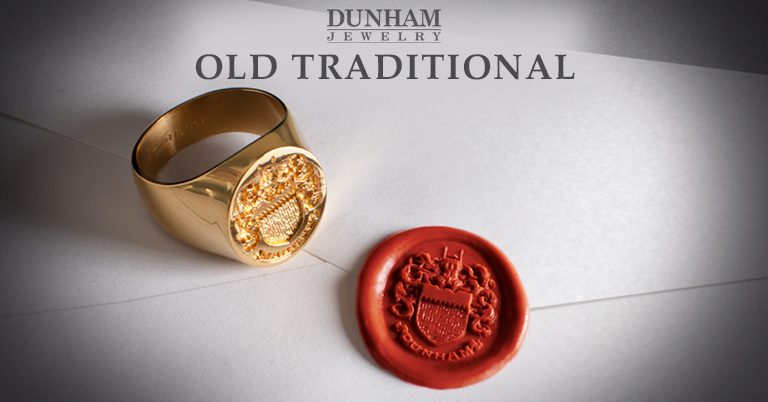
Historically, crest rings were used as signet rings. In fact, they pressed wax seals to authenticate documents. Today, however, they serve as powerful symbols of heritage rather than legal tools.
Crest Ring vs Signet Ring: Are They the Same?
Although people use the terms interchangeably, they are not identical. A crest ring can be a type of signet ring. However, not every signet ring features a family crest.
A signet ring traditionally includes any engraved emblem used to stamp wax. Meanwhile, a modern personalized signet ring may simply display initials. Consequently, the difference lies in function and symbolism.
If heritage matters most, choose a crest-based design. If minimal style appeals to you, a simple signet ring with initials may be ideal.
Coat of Arms Ring vs Name Ring: Design Complexity Matters
Design complexity directly impacts production time and cost. A coat of arms ring often includes layered artwork, deep carving, and refined relief.
Because of this, manufacturing requires skilled mold creation and precise casting. Fine details must remain sharp after polishing. Therefore, reputable jewelers use advanced carving techniques and controlled finishing processes.
In contrast, a name ring focuses on lettering. While still handcrafted, it usually requires less sculptural depth. As a result, turnaround time may be shorter.
Heritage Symbolism vs Personal Expression
Symbolism drives most buying decisions. A crest ring connects you to a broader family lineage. It honors ancestors and shared identity.
On the other hand, a family name ring highlights the present generation. It reflects pride in your immediate household. Consequently, the emotional focus shifts from history to personal identity.
Ask yourself one question: Do you want to honor where you came from, or celebrate who you are today? That answer clarifies your direction.
Which Is Better: Family Name Ring or Family Crest Ring?
There is no universal “better” option. Instead, the right choice depends on your priorities.
If you value simplicity, readability, and strong personalization, a family name ring may be ideal. It is straightforward and easy to customize.
However, if you prefer tradition and visual storytelling, a crest ring often feels more powerful. The detailed emblem creates depth and legacy.
Ultimately, the better ring is the one that aligns with your identity and long-term vision.
Custom Manufacturing Considerations
Craftsmanship separates high-quality rings from mass-produced pieces. A properly manufactured crest ring requires deep engraving and controlled polishing to preserve fine lines.
Meanwhile, name rings depend on crisp lettering. Poor engraving can appear shallow or uneven. Therefore, professional jewelers ensure correct metal depth before finishing.
Additionally, metal choice affects durability. Gold allows precise carving and resizing. Alternative alloys may limit adjustment options. As a result, discussing materials early prevents future issues.
Longevity and Resizing Factors
Durability matters if the ring is meant to last generations. Thicker tops and deeper engravings wear better over time.
For example, crest rings benefit from strong structural support beneath the emblem. Without it, detail may fade. Meanwhile, name rings require adequate depth so letters remain readable after years of polishing.
Resizing also differs by material. Precious metals typically allow adjustments. Non-precious alloys often do not. Therefore, confirm sizing policies before ordering.
Emotional Value Over Time
Twenty years from now, the meaning often outweighs the style. A crest ring may feel timeless because of its historic roots.
Conversely, a name ring may feel personal and intimate. It directly reflects your household identity. As a result, both styles carry emotional weight in different ways.
Think beyond current trends. Consider how the ring will feel when passed to the next generation.