The History of Sterling Silver Class Rings in America: From Tradition to Modern Customization
Sterling silver class rings became popular in America during the late 1800s and early 1900s as schools sought a lasting symbol of academic achievement. Because sterling silver offered durability, affordability, and an attractive appearance, it quickly became one of the most common metals used for class rings. Today, sterling silver remains a popular choice for students seeking a traditional, customizable ring that commemorates their educational journey.
Sterling Silver Class Rings at a Glance
| Feature | Details |
|---|---|
| Metal Composition | 92.5% Pure Silver, 7.5% Alloy |
| Traditional Use | High School and College Class Rings |
| Popularity Peak | Early 1900s–Present |
| Primary Benefits | Durable, Affordable, Attractive |
| Customization Options | School Name, Mascot, Activities, Birthstones |
| Collectibility | High |
| Heirloom Potential | Excellent |
| Modern Availability | Widely Available |
| Manufacturing | Often Handcrafted and Finished |
| Longevity | Can Last for Generations |
The Origins of Class Rings in America
The American class ring tradition traces its roots to the nineteenth century.
Although commemorative jewelry existed long before formal class rings, educational institutions began adopting rings as symbols of school identity and achievement. Early examples appeared at military academies and universities where students desired a visible representation of their connection to the institution.
As a result, class rings became more than decorative accessories. They evolved into symbols of belonging, accomplishment, and shared experience.
Initially, these rings were available only to a limited number of students. However, as manufacturing improved and educational opportunities expanded, class rings became increasingly accessible.
Why Sterling Silver Became the Preferred Metal
Several factors contributed to sterling silver’s rise in popularity.
First, sterling silver provided a bright, attractive appearance that resembled more expensive precious metals. Consequently, students could enjoy a premium-looking ring without the cost associated with higher-karat gold.
Additionally, sterling silver offered durability suitable for everyday wear. Unlike softer pure silver, sterling silver contains alloy metals that increase strength while maintaining the desirable appearance of silver.
Furthermore, schools and manufacturers appreciated sterling silver because it allowed for detailed engraving, intricate mascot artwork, and personalized design elements.
As a result, sterling silver became one of the most widely used metals for class rings throughout the twentieth century.
The Growth of Class Ring Traditions During the Early 1900s
During the early twentieth century, class rings transitioned from a college tradition to a widespread high school custom.
As secondary education became more common across America, schools sought new ways to celebrate student achievements and build school pride.
Class rings provided an ideal solution.
Students could display their graduation year, school mascot, athletic participation, academic interests, and personal accomplishments in a single piece of jewelry.
Meanwhile, advancements in jewelry manufacturing made custom ring production more efficient, allowing more students to participate in the tradition.
How World War II Influenced Class Ring Popularity
Following World War II, class ring ownership expanded significantly.
The post-war economic boom increased access to education and consumer goods. Consequently, more families viewed class rings as meaningful purchases rather than luxury items.
Additionally, the concept of preserving memories became increasingly important during this period.
Many graduates viewed their class rings as reminders of friendships, accomplishments, and life milestones.
Therefore, demand for customizable class rings continued to grow throughout the 1950s, 1960s, and 1970s.
The Evolution of Sterling Silver Class Ring Designs
Early class rings featured relatively simple designs.
Most included:
- School names
- Graduation years
- Initials
- Institutional seals
However, customization options expanded dramatically over time.
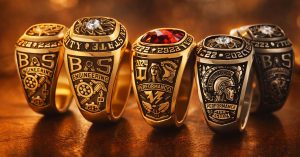
Modern sterling silver class rings often include:
- School mascots
- Sports participation
- Academic majors
- Club memberships
- Musical interests
- Career aspirations
- Personal engravings
- Birthstones
- Leadership positions
Consequently, today’s class rings tell a much more complete story of the wearer’s educational experience.
Why Sterling Silver Remains Popular Today
Although many alternative metals are available, sterling silver continues to maintain a strong position in the class ring market.
Several advantages contribute to its lasting appeal:
Affordability
Sterling silver remains significantly more affordable than many gold options while still offering precious-metal value.
Appearance
Its bright white finish complements nearly every ring style and gemstone color.
Customization
Sterling silver accepts detailed engraving exceptionally well, making it ideal for personalized designs.
Resizability
Unlike some alternative metals, sterling silver rings can often be resized if necessary.
Tradition
Many families appreciate the historical connection sterling silver provides to generations of graduates.
How Sterling Silver Class Rings Became Family Heirlooms
One reason sterling silver class rings have endured for more than a century is their ability to become family keepsakes.
Graduates often wear their rings for decades. Eventually, many rings are passed down to children, grandchildren, or other family members.
As a result, these rings frequently carry both historical and emotional significance.
A class ring may represent:
- Academic achievement
- Family tradition
- School pride
- Personal growth
- Lifelong friendships
- Career beginnings
Therefore, many owners view their rings as much more than jewelry.
Sterling Silver vs Other Class Ring Metals
| Metal | Appearance | Cost | Resizable | Tradition |
|---|---|---|---|---|
| Sterling Silver | Bright White | Moderate | Yes | Excellent |
| Palisil | White Gold Look | Lower | No | Moderate |
| Questra | Gold Appearance | Moderate | Yes | Good |
| 10K Gold | Rich Gold Tone | Higher | Yes | Excellent |
| 14K Gold | Premium Gold Tone | Premium | Yes | Excellent |
While every metal offers advantages, sterling silver often provides one of the best balances between appearance, customization potential, and affordability.
What Buyers Should Consider Before Choosing Sterling Silver
Before purchasing a sterling silver class ring, buyers should evaluate several factors.
First, consider daily wear habits. Sterling silver performs well for regular use but benefits from occasional cleaning.
Next, evaluate customization goals. Because sterling silver captures fine detail exceptionally well, it works particularly well for complex artwork and personalized engravings.
Additionally, consider long-term value. Sterling silver offers precious-metal content while remaining budget-friendly compared to higher-karat gold options.
Ultimately, many buyers choose sterling silver because it delivers an excellent combination of beauty, durability, and affordability.
How Modern Manufacturing Has Improved Sterling Silver Class Rings
Today’s class rings benefit from significantly improved manufacturing techniques.
Advanced design software allows greater customization than ever before. Meanwhile, modern production methods create sharper details, improved stone settings, and more consistent finishes.
At Dunham Jewelry Manufacturing, Inc., every custom class ring is manufactured and finished individually rather than mass-produced. This approach helps ensure sharper engraving detail, stronger stone settings, cleaner finishing, and better structural integrity. Additionally, every ring is backed by a Lifetime Warranty and manufactured in the United States.
FAQs
When did sterling silver class rings become popular in America?
Sterling silver class rings became increasingly popular during the late nineteenth and early twentieth centuries as schools expanded and class ring traditions spread beyond universities. Their affordability, durability, and attractive appearance made them a practical choice for students across the country.
Why is sterling silver used for class rings?
Sterling silver contains 92.5% pure silver and 7.5% alloy metals, creating a balance of beauty and strength. As a result, it offers the appearance of a precious metal while providing the durability needed for everyday wear and detailed customization.
What does .925 sterling silver mean?
The .925 stamp indicates that the metal contains 92.5% pure silver and 7.5% strengthening alloys. This standard has been used for generations and is recognized worldwide as the benchmark for quality sterling silver jewelry.
Are sterling silver class rings durable enough for daily wear?
Yes. Sterling silver is designed to withstand regular use while maintaining its appearance over time. Although occasional cleaning may be necessary, a well-made sterling silver class ring can last for decades when properly cared for.
Can sterling silver class rings be resized?
In most cases, yes. One advantage of sterling silver is that it can typically be resized by a qualified jeweler, making it a flexible option for students whose ring size may change over time.
Do sterling silver class rings tarnish?
Sterling silver can develop tarnish when exposed to air, moisture, and certain chemicals. However, tarnish is usually surface-level and can be removed through regular cleaning and proper storage.
Why do many students choose sterling silver instead of gold?
Many students choose sterling silver because it offers a classic appearance and precious-metal value at a more affordable price than gold. Consequently, it allows buyers to invest more in customization while staying within budget.
Are sterling silver class rings valuable?
Yes. Sterling silver has intrinsic precious-metal value and often gains additional sentimental value over time. Furthermore, vintage sterling silver class rings can become collectible pieces that represent important moments in educational history.
How long can a sterling silver class ring last?
With proper care, a sterling silver class ring can last for generations. Many rings from the early and mid-twentieth century are still worn or displayed today, demonstrating the metal’s long-term durability.
What customization options are available for sterling silver class rings?
Modern sterling silver class rings can be customized with school names, mascots, graduation years, sports, clubs, academic achievements, birthstones, career interests, personal engravings, and other meaningful symbols that reflect the student’s experience.
Do people still buy sterling silver class rings today?
Absolutely. Although new metal options are available, sterling silver remains one of the most popular choices because it combines tradition, affordability, customization, and long-term value.
Can sterling silver class rings become family heirlooms?
Yes. Many graduates pass their class rings to children, grandchildren, or other family members. As a result, sterling silver class rings often become treasured heirlooms that preserve family history, educational achievements, and personal memories.