Army Rings: Meaning and Tradition
Army rings symbolize service, rank, unit pride, and lifelong honor. Traditionally worn by active-duty soldiers and veterans, these rings feature unit insignia, rank symbols, and personal engravings. Over time, they have become heirloom pieces that reflect military identity, sacrifice, and brotherhood while preserving a soldier’s legacy for future generations.
Army rings are not trend-driven accessories. Instead, they serve as permanent markers of commitment. Each ring represents a chapter of service, often tied to a unit, campaign, or milestone achievement.
Moreover, these rings connect generations. Veterans frequently pass them down, transforming a personal keepsake into a family legacy.
Army Ring Components and Their Symbolism
| Element | Meaning | Typical Customization Options | Why It Matters |
|---|---|---|---|
| Unit Insignia | Identifies specific battalion or division | Engraved crest or raised emblem | Shows loyalty and brotherhood |
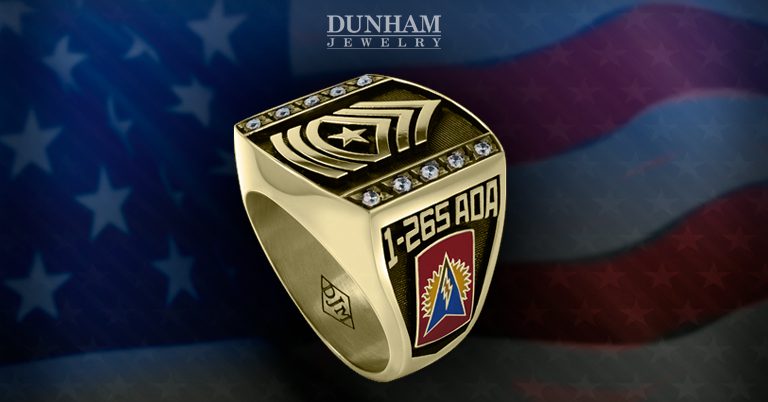
| Rank Symbol | Reflects achieved rank | Chevrons, bars, or officer insignia | Honors career progression |
| Army Crest | Represents U.S. Army identity | Traditional crest ring or signet | Signals official affiliation |
| Engraving | Personal service details | Name, years served, motto | Adds individual legacy |
| Metal Choice | Durability and value | Palisil, Silver, 10k–18k Gold | Impacts longevity and heirloom value |
The Historical Roots of Army Rings
Military rings date back centuries. Ancient warriors wore signet rings to mark authority. Later, European officers adopted engraved rings bearing family crests and military emblems.
In the United States, the tradition grew alongside formal military academies and unit identity. For example, graduates of institutions such as United States Military Academy are well known for their class and service rings.
However, Army rings are not limited to academy graduates. Enlisted personnel and officers alike commission custom army rings to reflect unit pride and career milestones.
What Army Rings Represent Today
Modern Army rings represent four core values: service, sacrifice, brotherhood, and legacy.
First, service is visible through rank symbols and branch insignia. Each detail tells a career story. Additionally, the inclusion of deployment dates or operation names deepens meaning.
Second, sacrifice is symbolized by the permanence of the metal. Durable construction reflects resilience. Meanwhile, engravings serve as reminders of challenges overcome.
Third, brotherhood is displayed through unit rings. Soldiers who served together often commission matching designs.
Finally, legacy transforms the ring into an heirloom. As a result, it becomes more than jewelry—it becomes history.
Common Army Ring Designs
Army ring designs vary widely. However, several traditional styles remain popular.
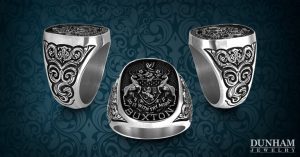
Army Signet Rings feature a bold, flat face engraved with a crest. These designs emphasize authority and tradition.
Army Crest Rings showcase the official Army emblem prominently. Therefore, they are often selected by career service members.
Army Unit Rings focus on battalion or division insignia. For example, airborne units may include parachute wings or motto engravings.
In contrast, modern designs may include black finishes or mixed metals for a contemporary look.
Materials Used in Custom Military Rings Made in the USA
American manufacturers typically start with .9995 pure gold or certified alloys. These are blended in-house to meet exact karat specifications. Therefore, consistency remains high from batch to batch.
Additionally, stones are set using mechanical and hand-finished methods. This reduces loosening over time. In contrast, lower-cost imports often rely on adhesive or shallow seat settings, which fail under daily wear.
Custom Army Rings: Personalizing the Legacy
Customization defines modern military jewelry. Instead of choosing generic designs, service members often personalize every detail.
Metal choice influences both appearance and longevity. Palisil offers affordability, while sterling silver provides classic appeal. Gold options—10k, 14k, and 18k—add heirloom value.
Engravings usually include name, rank, years of service, and unit motto. Consequently, no two rings are identical.
Some veterans also add gemstone accents. Although subtle, these stones may represent branch colors or personal milestones.
Durability and Material Selection
Army rings must withstand daily wear. Therefore, durability matters as much as design.
Gold remains a preferred option for long-term value. Meanwhile, sterling silver offers strength with a lower investment. Palisil provides a non-precious alternative with strong visual appeal.
Importantly, higher gold content results in richer color. However, softer alloys may show wear faster. As a result, many choose 10k or 14k for balance between strength and prestige.
The Heirloom Factor: Why Army Rings Are Passed Down
Unlike many accessories, Army rings are built for generational transfer.
Over time, the ring becomes a tangible story. Children and grandchildren inherit more than metal—they inherit memory.
Additionally, engraved details preserve identity long after uniforms are retired. Because of this, many veterans treat their rings as legacy investments.
Families often frame service documents alongside the ring. Consequently, the piece becomes a centerpiece of remembrance.
Army Rings vs. Other Military Rings
Army rings differ from Navy, Air Force, or Marine Corps rings primarily through insignia and symbolism.
For instance, branch-specific crests reflect identity. Meanwhile, unit rings emphasize battalion or division service.
Although the structure may look similar, the meaning remains deeply branch-specific. Therefore, accurate design matters.
When Should a Soldier Order an Army Ring?
There is no strict rule. Some commission rings upon promotion. Others wait until retirement.
However, many choose milestone moments such as completion of deployment or reaching a career benchmark.
Timing often aligns with personal significance rather than formal ceremony. As a result, the ring marks a moment the soldier values most.
FAQ: Army Rings Meaning and Tradition
What does an Army ring symbolize?
An Army ring symbolizes service, rank, unit pride, and lifelong commitment. It often includes insignia and engravings that reflect a soldier’s career and achievements.
Who can wear an Army ring?
Active-duty soldiers, veterans, and Army academy graduates commonly wear Army rings. The ring represents service affiliation and earned identity.
Are Army rings only for officers?
No. Both enlisted personnel and officers commission Army rings. Designs simply reflect different ranks and unit affiliations.
What metal is best for an Army ring?
Gold offers long-term value and heirloom quality. However, sterling silver and alternative alloys provide durable and affordable options.
Can Army rings be customized?
Yes. Most Army rings allow customization of insignia, engraving, metal type, and finish. Therefore, each ring becomes unique to the service member.
Post Views: 419