
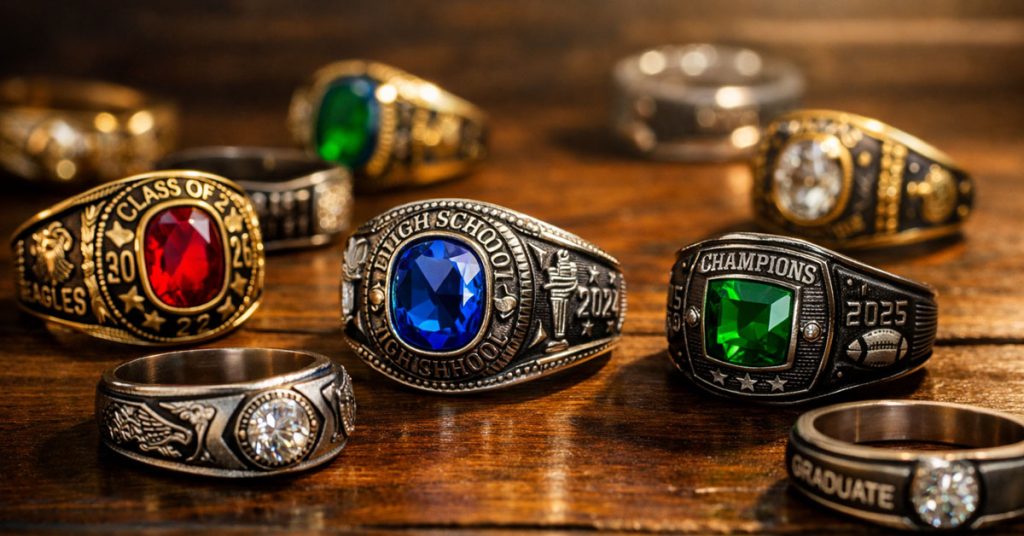
Class Rings Designs: The Complete Guide to Styles, Customization, and Meaning
Key Elements That Define Class Rings Designs
Understanding the core components helps you make better design choices. Every class ring includes several customizable features that work together.
| Element | Options | Purpose | Impact on Design |
|---|---|---|---|
| Ring Shape | Oval, antique, stadium, classic | Defines structure | Controls overall look |
| Metal Type | Gold, silver, Questra, Palisil | Affects durability & cost | Changes color & value |
| Center Stone | Gemstones, school colors | Adds focal point | Enhances visibility |
| Side Panels | Mascots, logos, symbols | Personal identity | Tells your story |
| Engraving | Names, dates, messages | Adds meaning | Creates emotional value |
| Finish | Polished, matte, textured | Surface appearance | Influences style tone |
Popular Class Rings Designs Styles
Class rings designs typically fall into a few main style categories. Each one appeals to different personalities and preferences.
Classic Designs
Classic styles remain popular because they feel timeless. They often feature clean lines, a bold center stone, and simple engravings.
These designs work well for those who want a traditional look. Additionally, they pair easily with both casual and formal wear.
Antique Designs
Antique class rings designs use detailed textures and vintage-inspired elements. These rings often include intricate engravings and aged finishes.
As a result, they feel unique and artistic. They appeal to people who prefer character over simplicity.
Stadium Designs
Stadium styles are bold and wide. They feature larger tops and more space for customization.
Because of this, they are perfect for adding mascots, achievements, and multiple symbols. They also tend to stand out more visually.
Fashion Designs
Fashion-forward class rings designs focus on style trends. They may include slimmer bands, modern shapes, or minimalist features.
Meanwhile, these designs attract students who want something less traditional and more wearable daily.
Custom Class Rings Designs: How Personalization Works
Choosing the Right Metal for Your Design
Metal selection plays a major role in both appearance and durability. It also affects long-term wear and maintenance.
Affordable and Stylish Options
Palisil offers a white gold look at a lower cost. However, it cannot be resized, so sizing must be exact.
Yellow and black Palisil provide different finishes. These options are visually striking but may require replating over time.
Mid-Range Options
Questra is a 6k gold option that balances affordability and value. It can also be resized, which adds flexibility.
Sterling silver is another strong choice. It offers a bright finish and classic appeal while remaining budget-friendly.
Premium Metals
Gold options like 10k, 14k, and 18k provide long-term durability and prestige. They are often chosen for lifetime wear.
Because these metals can be resized, they remain practical as well as valuable.
What Makes a Class Ring Design Meaningful
Not all class rings designs carry the same emotional weight. The difference comes from how well the ring reflects your experience.
A meaningful design often includes:
- Your graduation year
- School name or initials
- Academic major or degree
- Personal achievements
- Symbols of identity or passion
Because of this, a well-designed ring becomes more than an accessory. It becomes a daily reminder of discipline and growth.
Factory Direct vs Retail Designs: What’s the Real Difference?
Trends Shaping Modern Class Rings Designs
Class rings designs continue to evolve. New trends reflect changing styles and preferences.
Minimalist Designs
Many students now prefer clean and simple rings. These designs focus on subtle details rather than bold features.
Mixed Metals
Combining different metals creates contrast and uniqueness. This trend adds depth to the design.
Custom Engravings
Personal messages are becoming more detailed. Some include quotes or meaningful phrases.
Symbol-Driven Designs
Rings now include symbols beyond school identity. These can represent hobbies, careers, or personal journeys.