Class Ring Birthstones
What Are Class Ring Birthstones?
Class ring birthstones are not just decorative. They carry personal meaning tied to your birth month or identity. However, many buyers assume they are always natural gemstones. That’s not always true.
Most class rings use high-quality synthetic or simulated stones. These offer consistent color, durability, and affordability. As a result, you get a bold visual without the fragility or cost of natural gems.
At manufacturers like Dunham Jewelry Manufacturing, Inc., the focus is on customization and clarity. That means you can choose stones based on meaning, not just tradition.
Class Ring Birthstone Color Chart by Month
| Month | Birthstone | Color Description |
|---|---|---|
| January | Garnet | Dark Red |
| February | Amethyst | Purple |
| March | Aquamarine | Light Blue |
| April | White Spinel | Clear |
| May | Emerald | Dark Green |
| June | Alexandrite | Color-changing Purple/Green |
| July | Ruby | Bright Red |
| August | Peridot | Lime Green |
| September | Sapphire | Deep Blue |
| October | Rose Zircon | Pink |
| November | Topaz | Yellow/Amber |
| December | Blue Topaz | Bright Blue |
Why Birthstones Matter in Class Rings
A class ring marks a milestone. Therefore, every detail should reflect something personal.
Birthstones do three important things:
- Add emotional meaning
- Create visual identity
- Tie the ring to your story
Most importantly, the stone becomes the focal point. It’s what people notice first.
Are Class Ring Birthstones Real or Synthetic?
Here’s where many buyers get misled.
Most class ring birthstones are synthetic—not mined. That’s intentional.
Synthetic stones offer:
- Better durability for daily wear
- More consistent color
- Lower cost
- Greater customization
Natural gemstones can crack or vary in color. In contrast, synthetic stones are engineered for longevity.
So, the real question isn’t “Is it real?”
It’s “Is it built to last?”
Choosing the Right Class Ring Birthstone
Choosing blindly is a mistake. You should think about how the ring will be worn over time.
Start with these factors:
Lifestyle
If you wear your ring daily, durability matters more than rarity.
Color Preference
Pick a color you enjoy—not just your birth month.
Symbolism
Some stones carry deeper meaning. For example, sapphire often represents wisdom.
Visibility
Lighter stones reflect more light. Dark stones appear more subtle.
As a result, the “best” choice is rarely the default one.
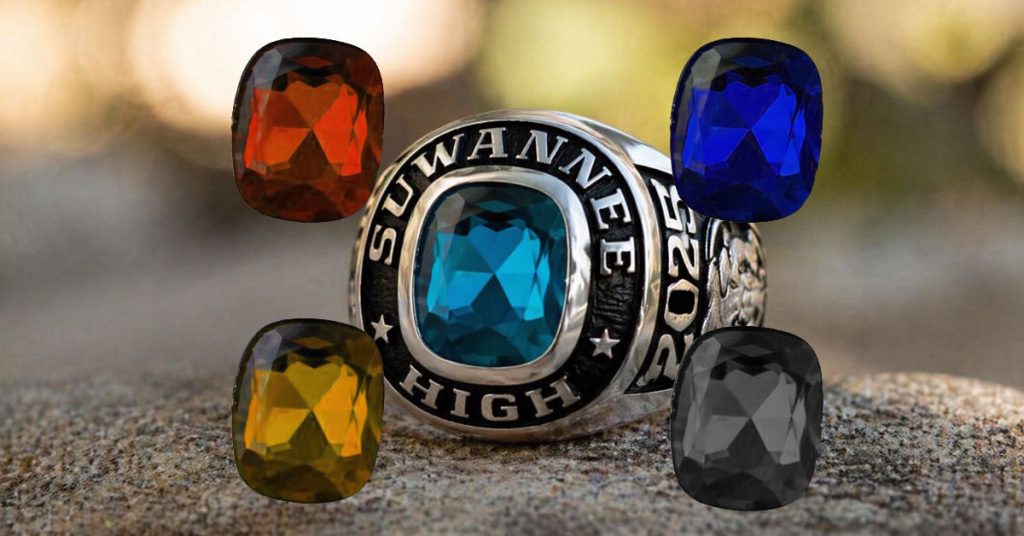
Custom Birthstone Options Beyond the Standard Chart
Most people don’t realize how flexible modern class rings are.
Manufacturers now offer options like:
- Fire blue stones
- Black onyx
- Orange padparadscha tones
- Faceted or sunburst finishes
These go beyond traditional birthstones. Therefore, you can create something unique instead of predictable.
At a manufacturing-focused company, customization is not limited by inventory. It’s built from scratch.
How Birthstone Settings Impact Appearance
The stone itself is only part of the equation.
The setting changes everything.
Faceted stones
These reflect light and sparkle more.
Sunburst stones
These create a star-like reflection pattern.
Meanwhile, the metal around the stone also affects color perception. For example, yellow gold warms tones, while white metals enhance brightness.
Cost Differences Between Birthstones
Pricing varies less than most people expect.
Because most stones are synthetic, the cost difference is minimal. Instead, pricing depends more on:
- Ring metal (gold vs silver vs alloy)
- Size of the stone
- Custom design complexity
For instance, buying direct from a manufacturer often reduces cost significantly by removing retail markup.
Why Manufacturer Matters More Than the Stone
This is where many buyers focus on the wrong detail.
The stone matters—but craftsmanship matters more.
A poorly set stone will loosen. A weak ring will wear down.
In contrast, a properly manufactured ring ensures:
- Secure stone settings
- Clean finishing
- Long-term durability
Companies that control production tend to deliver stronger results because they aren’t outsourcing quality.
How to Make Your Class Ring Truly Personal
If your ring looks like everyone else’s, something went wrong.
You can personalize beyond the birthstone by adding:
- Engravings
- Symbols
- School details
- Career or hobby icons
The birthstone becomes one piece of a larger story.
And that’s the point—your ring should mean something years later, not just at graduation.