Family Crest Pendants: Definition and Meaning
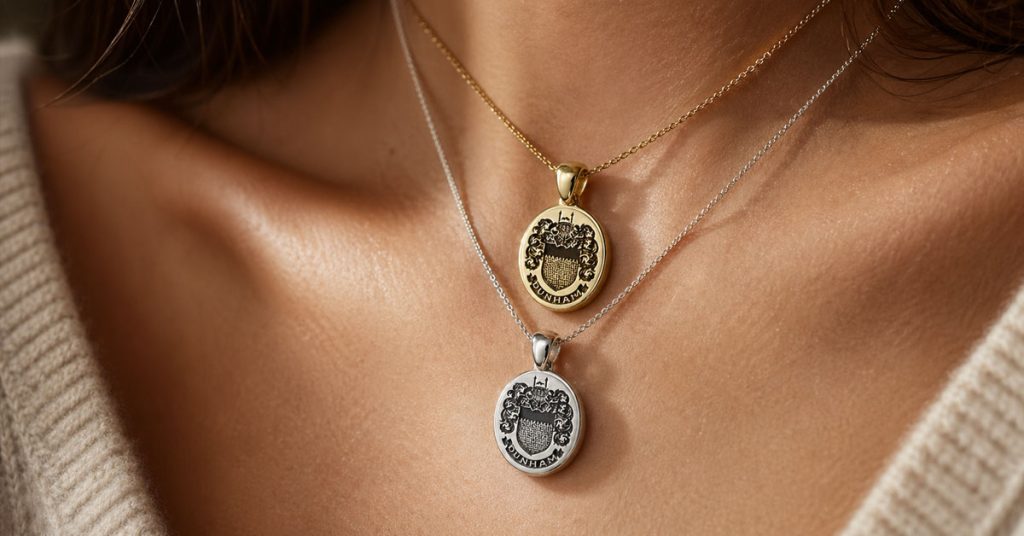
Family crest pendants are custom jewelry pieces that display a historically accurate coat of arms tied to a specific family lineage. They are not decorative symbols alone. Instead, they represent identity, ancestry, and heritage through precise heraldic design.
These pendants carry meaning because each element—shield, symbols, and layout—has historical significance. However, accuracy depends on proper sourcing. Without that, the pendant becomes decorative rather than authentic.
Why Family Crest Pendants Matter More Than Most Jewelry
Unlike standard jewelry, family crest pendants connect directly to personal history. Therefore, they hold long-term emotional value, not just visual appeal.
Many buyers assume all crest designs are interchangeable. That assumption leads to mistakes. In reality, heraldry is specific to lineage, not just surnames. As a result, two people with the same last name may not share the same crest.
Moreover, these pendants often become heirlooms. Because of that, craftsmanship and accuracy matter far more than trend-based jewelry.
Key Differences in Family Crest Pendant Styles
Not all family crest pendants are made the same way. Design style affects both appearance and function.
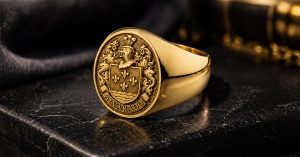
Raised designs place the crest above the surface. This creates strong visual depth and makes details easier to see.
Engraved designs cut the image into the surface. These tend to be more subtle and refined.
Reversed designs serve a different purpose. They are made to create wax seals. When stamped, the image appears correctly oriented.
Because of this, choosing the right style depends on how you plan to use the pendant.
Family Crest Pendant Comparison Table
| Feature | Raised Design | Engraved Design | Reversed (Seal) Design |
|---|---|---|---|
| Visual Depth | High | Moderate | Low |
| Detail Visibility | Strong | Clean but subtle | Minimal visually |
| Functional Use | Display | Everyday wear | Wax sealing |
| Orientation | Correct-facing | Correct-facing | Reversed on pendant |
| Historical Purpose | Decorative | Personal wear | Official sealing |
| Popularity | High | Very high | Niche |
What Determines Accuracy in Family Crest Pendants
Accuracy starts with verified heraldic records. Without that, the design has no real historical foundation.
Many online sellers rely on bulk crest databases. These systems assign designs based only on surnames. However, heraldry does not work that way. It is tied to specific family lines, not broad name matches.
Additionally, proportions matter. Small errors in shield shape or symbol placement can change meaning. Therefore, precision is critical.
Because of these factors, true accuracy requires research, not automation.
Why Most Family Crest Pendants Are Inaccurate
Mass production creates shortcuts. That is the core issue.
Retail-driven jewelry companies often prioritize speed over detail. As a result, they use pre-made templates. This limits customization and reduces authenticity.
Furthermore, many sellers never verify historical records. Instead, they rely on generic artwork. Consequently, buyers receive a symbol that may not belong to their lineage.
This is why skepticism matters when purchasing. If the process seems too simple, it usually is.
The Role of Manufacturing in Quality and Longevity
Manufacturing methods directly affect durability and detail.
Mass-produced pendants often lack depth and structure. Over time, details wear down quickly.
In contrast, individually crafted pieces maintain sharper engraving and stronger structure. This difference becomes obvious with daily wear.
Direct manufacturers also control material quality. In-house production allows better oversight of metals, craftsmanship, and finishing. As a result, the final product lasts longer and retains detail.
Material Choices and What They Actually Mean
Material selection is often misunderstood. Many buyers focus only on appearance. However, durability and long-term value matter more.
For example, non-precious alloys can offer affordability but may not last as long. Meanwhile, gold and silver provide better longevity and resale value.
Additionally, some materials allow resizing, while others do not. This becomes important over time.
Because of this, choosing the right material depends on how often the pendant will be worn.
Custom vs Mass-Produced Family Crest Pendants
The difference between custom and mass-produced jewelry is significant.
Custom pendants are built individually. Therefore, they allow full control over design, material, and accuracy.
Mass-produced pieces follow templates. This limits personalization and often sacrifices detail.
Moreover, direct manufacturing eliminates retail markups. Buying directly from a manufacturer can reduce cost while improving quality control.
This combination creates better long-term value.
How to Choose the Right Family Crest Pendant
Start with verification. Always confirm that the crest comes from legitimate heraldic records.
Next, consider design style. Decide whether you want visual impact or traditional functionality.
Then evaluate materials. Think about daily wear versus occasional use.
Finally, review how the piece is made. If the process lacks transparency, that is a warning sign.
Because of these steps, informed buyers avoid the most common mistakes.
The Long-Term Value of Family Crest Pendants
Family crest pendants are not short-term purchases. They are meant to last decades.
Over time, they often become symbolic objects passed through generations. Therefore, quality and accuracy directly affect their long-term meaning.
Additionally, well-crafted pieces maintain their appearance. This preserves both emotional and material value.
Because of this, cutting corners rarely makes sense.