Family Crest Rings Accuracy Guide: How to Verify Your Design
Family Crest Rings Accuracy Checklist for First-Time Buyers
Family crest rings carry meaning beyond appearance. They represent lineage, identity, and heritage. However, not all rings are created with the same level of accuracy.
Many buyers assume any crest online is legitimate. That assumption often leads to incorrect designs. Therefore, understanding accuracy is critical before purchasing.
| Factor | Accurate Family Crest Ring | Inaccurate Ring |
|---|---|---|
| Source | Verified heraldic records | Generic database |
| Design Detail | Precise symbols and proportions | Simplified or altered |
| Manufacturing | Custom-built per order | Mass-produced |
| Orientation | Historically correct | Often reversed incorrectly |
| Longevity | Built for lifetime wear | Lower durability |
| Meaning | True family representation | Decorative only |
What Determines Family Crest Rings Accuracy
Accuracy starts with the source. A legitimate crest must come from historical records, not a generic template.
However, many online sellers rely on bulk databases. These often assign the same crest to anyone with a matching surname. That approach is flawed because heraldry is tied to specific family lines, not just names.
Additionally, correct proportions matter. Small details like shield shape, symbols, and spacing must match the original design. Even minor changes can alter meaning.
Why Most Family Crest Rings Are Inaccurate
Mass production is the main problem. Retailers often prioritize speed over precision.
For example, pre-made molds limit customization. As a result, details are simplified or lost. Meanwhile, engraving quality often suffers due to bulk processing.
In contrast, true accuracy requires individual craftsmanship. Each ring must be built from scratch based on verified artwork.
This is where direct manufacturing makes a difference. Companies that control design and production maintain better accuracy standards.
Old vs New vs Raised Designs: Does Accuracy Change?
Design style impacts both appearance and function.
Raised designs place the crest above the surface. These highlight detail but do not create a traditional seal.
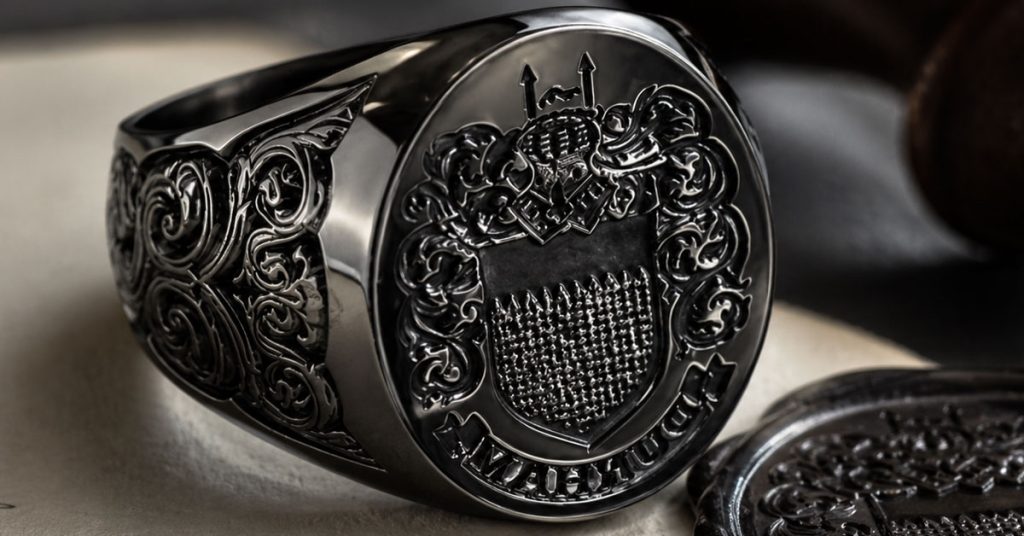
Engraved designs cut into the surface. These are closer to historical signet rings.
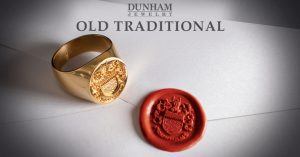
Reversed designs are the most traditional. They create a correct wax seal impression. However, many buyers misunderstand this and assume the reversed look is incorrect.
Therefore, accuracy depends on intended use. A decorative ring and a functional signet ring require different approaches.
Custom vs Mass-Produced: The Accuracy Gap
Custom rings offer full control. Every element is tailored to the verified crest.
Mass-produced rings rely on templates. This limits detail and introduces errors.
Moreover, custom manufacturing allows proper scaling. Symbols remain proportional, even on smaller rings.
Most importantly, handcrafted production preserves fine engraving. This ensures the crest remains clear over time.
How to Verify Family Crest Rings Accuracy Before Buying
Start by asking where the crest comes from. A reputable source should provide documentation or verification.
Next, review the design proof. Compare it to known heraldic records if possible.
Also, check manufacturing details. Rings made individually tend to be more accurate than bulk items.
Finally, look for transparency. Companies that explain materials, process, and design steps are more reliable.
Material and Craftsmanship Impact Accuracy
Accuracy is not just visual. It is structural.
Soft or low-quality metals lose detail quickly. Over time, engraving fades or distorts.
In contrast, high-quality materials preserve fine lines. This is critical for complex crests.
Additionally, handcrafted finishing improves clarity. Machine polishing can blur details, while hand finishing maintains precision.
Why Accuracy Matters Long-Term
A family crest ring is not disposable. It represents identity and history.
An inaccurate ring loses meaning. It becomes decorative rather than symbolic.
However, an accurate ring holds long-term value. It can be passed down and retain significance.
Most importantly, accuracy protects the integrity of your family’s story.
The Hidden Cost of Getting It Wrong
At first glance, cheaper rings seem appealing. However, they often lack accuracy.
Over time, buyers realize the design is incorrect. This leads to replacement costs.
Therefore, investing in accuracy upfront avoids long-term regret.
In many cases, direct manufacturers offer better value because they eliminate retail markup while maintaining quality.