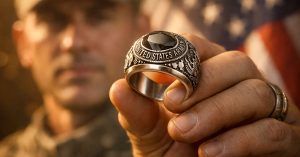

How Custom Rings Are Made Step by Step
How Custom Rings Are Made Step by Step begins with engineered CAD design, where engraving and structural details are built into the model. The process continues through mold creation, precision casting, hand refinement, stone setting, polishing, and strict quality control to ensure durability, clarity, and long-term performance.
Custom jewelry production is not guesswork. Instead, it follows a controlled workflow that combines digital precision with skilled craftsmanship. At Dunham Jewelry Manufacturing, Inc., every ring is made one at a time using high-purity metals and industry-compliant standards.
Because engraving, stone placement, and structural thickness are engineered from the start, the final ring is stronger and more precise. Consequently, the difference between mass-produced jewelry and true custom work becomes clear. Custom Ring Manufacturing Process Overview
| Stage | What Happens | Technical Purpose | Quality Impact |
|---|---|---|---|
| 1. Concept & Engineering Design | Engraving, logos, text, and stone placement built into CAD | Controls depth, spacing, shrinkage allowance | Prevents distortion and weak areas |
| 2. 3D Modeling & File Validation | Digital structural review | Ensures wall thickness and durability | Reduces casting defects |
| 3. 3D Print & Mold Creation | Wax/resin model printed | Prepares investment mold | Locks in precision |
| 4. Casting | Molten metal fills mold | Forms solid structure | Determines density & strength |
| 5. Structural Cleanup | Sprue removal & surface refinement | Maintains geometry | Improves longevity |
| 6. Stone Setting | Stones seated into engineered seats | Secures gemstones | Prevents stone loss |
| 7. Polishing & Finishing | Multi-stage polishing | Defines final appearance | Enhances brilliance |
| 8. Final Quality Control | Inspection & sizing verification | Confirms specifications | Ensures lifetime durability |
Step 1: Engineering the Design (Including Engraving)
Every custom ring begins with concept development. However, at a high level of manufacturing, design is engineering.
Using advanced CAD software, jewelers build the ring digitally. Importantly, engraving is integrated directly into the 3D model. Depth, font spacing, logo placement, and relief detail are calculated before casting.
Because metal shrinks slightly during cooling, shrinkage compensation is built into the file. Therefore, lettering remains sharp and proportional after casting. This approach prevents shallow engraving that fades over time.
At Dunham Jewelry, engraving is not an afterthought. It is structurally designed.
Step 2: Structural CAD Validation
Once the design is modeled, the file undergoes digital review. Wall thickness, stone seat depth, and stress points are evaluated.
Additionally, weak areas beneath engraving are reinforced. As a result, the ring maintains strength without appearing bulky.
Many factories skip this review stage. In contrast, engineered validation ensures long-term durability, especially for class rings and championship rings worn daily.
Step 3: 3D Printing and Mold Creation
After approval, a high-resolution 3D printer produces a wax or resin model. This model contains every engraved detail.
Next, the model is placed into investment material. Heat removes the wax, leaving a precise cavity.
Because engraving was built into CAD, it now exists in the mold itself. Consequently, casting preserves those details at full depth.
Step 4: The Ring Casting Process
Casting transforms design into solid metal.
At Dunham Jewelry, gold is purchased in .9995 pure form and alloyed to meet United States National Stamping Act standards. This ensures accuracy in karat value.
Molten metal is then forced into the mold using pressure-assisted casting. As the metal cools, density and structural integrity are formed.
When the investment mold is removed, the raw ring appears with engraving already present in relief or recess form.
Step 5: Structural Cleanup and Refinement
After casting, excess metal is removed. Jewelers refine edges and sharpen engraved lines.
Although the engraving was formed during casting, precision tools enhance clarity. Importantly, this step does not weaken the structure because depth was engineered beforehand.
Rushed production often over-polishes engraved areas. However, controlled refinement preserves crisp detail.
Step 6: Precision Stone Setting
If the ring includes gemstones, stone setting follows.
Seats for stones were pre-designed in CAD. Therefore, each stone fits securely without forcing the metal.
Setters use microscopes and calibrated tools to secure prongs or bezels. As a result, stones sit level and tight.
Loose stones typically result from poor engineering. Proper seat depth prevents that issue.
Step 7: Multi-Stage Polishing and Surface Finishing
Polishing occurs in stages. First, coarse compounds smooth casting marks. Then, finer compounds create shine.
Additionally, finishes may include high polish, matte, antique, or brushed textures. Each finish is controlled to protect engraved areas.
Because polishing can soften details, experienced jewelers adjust pressure and angle. Consequently, engraving remains sharp while surfaces glow.
Step 8: Final Quality Control
Before shipment, each ring undergoes inspection.
Technicians verify:
- Engraving depth and clarity
- Stone security
- Metal purity stamp
- Surface consistency
- Exact ring size
Any flaw is corrected before release. Therefore, quality control protects both customer satisfaction and brand reputation.
Why Engineering Matters More Than Most People Realize
A custom ring is not just decorative. It is a structural object worn daily.
If engraving is added at the end, it can thin the metal. If stone seats are cut too shallow, stones loosen. If casting density is poor, rings crack.
By engineering engraving into the design phase, structural strength remains intact. Consequently, the ring lasts for decades.
This difference defines professional custom jewelry production.
Modern CAD Precision Meets Handcrafted Finishing
Technology alone does not create quality. However, neither does handwork without planning.
At Dunham Jewelry Manufacturing, Inc., CAD modeling ensures precision. Meanwhile, hand finishing ensures character.
This balanced approach creates rings that are consistent, durable, and personal.
How Long Does It Take to Make a Custom Ring?
Most custom rings require three to six weeks.
Complex rings may require additional time due to stone count and detail. Production scheduling, customization depth, and engraving complexity all influence timelines.
Therefore, ordering early prevents delays.
FAQ: How Custom Rings Are Made Step by Step
Is engraving added before or after casting?
Engraving is engineered during the CAD design phase. The depth and placement are built into the model before casting. After casting, jewelers refine the engraving, but the structure is already formed.
Why is CAD design important for custom rings?
CAD ensures correct proportions, wall thickness, and stone seat depth. As a result, structural integrity improves and costly errors are avoided.
What determines the strength of a custom ring?
Metal purity, casting density, wall thickness, and proper engineering determine strength. Consequently, rings designed carefully from the start last longer.
Are custom rings made one at a time?
Yes. High-quality manufacturers produce rings individually rather than in bulk. This approach allows better quality control and attention to detail.
How do I know if a custom ring is high quality?
Look for clear metal stamps, secure stones, deep engraving, smooth finishing, and documented manufacturing standards.
Post Views: 16