
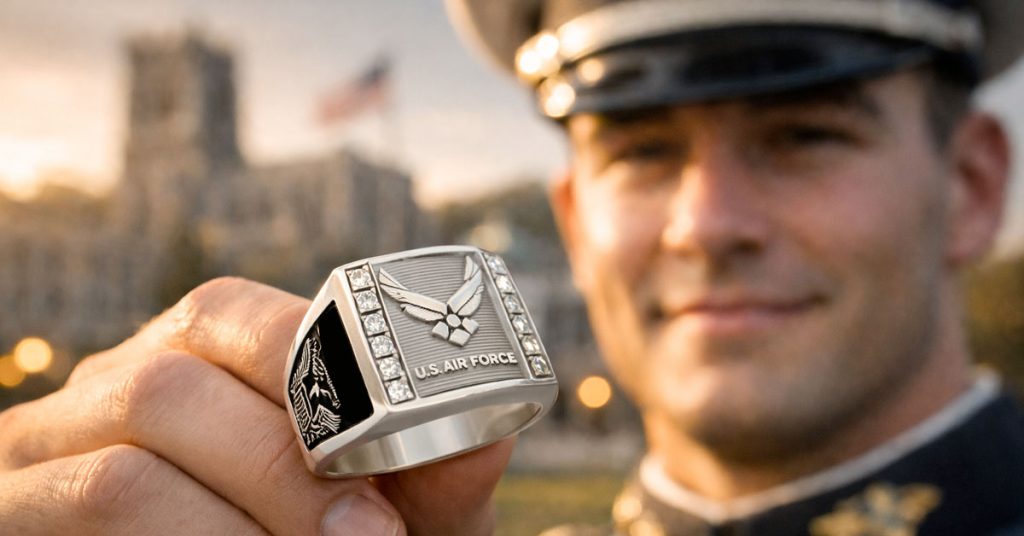
Military Academy Rings: Metals, Stones, and Custom Features Explained
Military Academy Rings are traditional rings worn by graduates of military academies to symbolize achievement, service, and lifelong commitment.
These rings often feature academy crests, class insignia, and personalized elements that reflect each cadet’s journey and identity.
The History of Military Academy Rings
The History of Military Academy Rings
Military academy rings began in 1835 at West Point. This tradition quickly spread to other academies.
Today, it remains one of the most respected traditions in military education.
These rings are not just jewelry. Instead, they represent discipline, sacrifice, and achievement.
Many graduates wear them daily as a reminder of their journey.
Key Traditions Across Military Academies
Each academy has its own unique style and symbolism. However, all share a strong focus on identity and honor.
For example, West Point rings often include a class crest and the academy’s eagle and shield.
Naval Academy rings follow a similar structure.
Meanwhile, Air Force Academy rings stand out by using white gold to reflect the sky and flight.
| Academy | Signature Design Elements | Unique Feature | Traditional Stone |
|---|---|---|---|
| West Point (USMA) | Class crest + Eagle & Shield | Oldest tradition (1835) | Black onyx |
| Naval Academy (USNA) | Class crest + Academy crest | “Combat rings” for daily wear | Varies |
| Air Force (USAFA) | Clean, modern crest design | White gold standard | Blue stones common |
| Custom Military Rings | Fully personalized designs | Flexible customization | Any stone |
What Military Academy Rings Represent
Key Features to Look For
Choosing the right ring requires attention to detail. Several elements define both appearance and durability.
Metals
Metal choice affects both look and longevity. Options range from affordable alloys to premium gold.
For example, Palisil offers a white gold look at a lower cost. However, it cannot be resized.
Meanwhile, gold options like 10k, 14k, and 18k provide durability and long-term value. Additionally, they can be resized, which adds flexibility over time.
Stones
Stones add personality and tradition. Black onyx remains a classic choice, especially at West Point.
However, many cadets now choose custom stones. These may represent school colors, rank, or personal meaning.
Side Panels
Side panels tell your story. They often include:
Military branch insignia
Graduation year
Personal achievements
Unit or division symbols
Because of this, side panels are one of the most customized parts of the ring.
Engraving
Engraving adds a private layer of meaning. Many choose initials, dates, or short messages.
Although small, this detail makes the ring deeply personal. As a result, it becomes more than a symbol—it becomes a memory.
Resizing and Warranty
Not all rings can be resized. Therefore, material selection matters early in the process.
For instance, gold and silver rings allow resizing. In contrast, certain alloys do not.
Additionally, a lifetime warranty adds long-term value. It ensures your ring remains wearable for years.
Custom vs Traditional Military Academy Rings
Who Buys Military Academy Rings
Military academy rings are not limited to graduates. Several groups commonly purchase them:
- Current cadets preparing for graduation
- Family members seeking commemorative gifts
- Alumni upgrading or replacing older rings
Additionally, miniature versions are popular. These are often given as keepsakes to family members.
Why Military Academy Rings Still Matter Today
Some traditions fade. This one has not.
Military academy rings remain relevant because they represent real achievement. Unlike digital milestones, they are physical reminders of hard work.
Moreover, they create instant connections. Many veterans recognize each other through their rings. As a result, the ring becomes both a symbol and a conversation starter.