
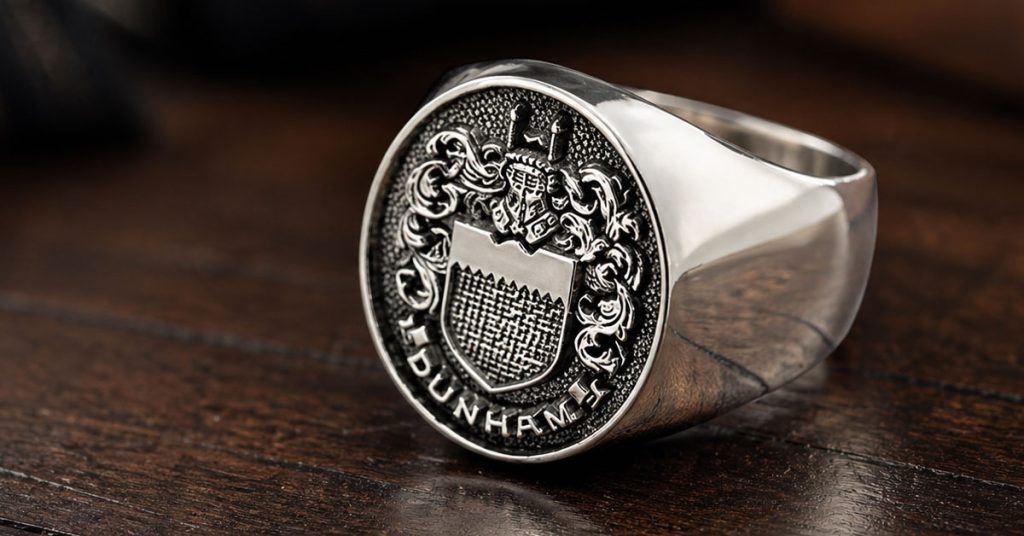
Signet Rings with Family Crest Silver: Complete Buyer’s Guide
Signet rings with family crest silver are custom rings made from sterling silver (.925) that feature a family coat of arms engraved or raised on the surface.
These rings represent heritage, identity, and tradition while offering durability, affordability, and timeless design compared to gold alternatives.
What Are Signet Rings with Family Crest Silver?
Signet rings with family crest silver are more than jewelry. They are identity pieces tied to lineage and legacy. Traditionally, these rings were used to seal documents with wax. Today, they serve as personal symbols of family pride.
Unlike generic rings, these designs feature a coat of arms unique to your ancestry. Therefore, each piece becomes deeply personal. Silver remains a popular choice because it balances cost, durability, and visual appeal.
Most importantly, modern versions allow full customization, which means you are not limited to pre-made templates.
Core Design Types: Raised vs Engraved vs Reversed
When choosing a family crest ring, design style matters more than most buyers expect.
Raised designs place the crest above the surface. As a result, they create a bold, high-contrast look. Engraved designs, however, cut the image into the metal. This creates a more subtle, traditional finish.
Meanwhile, reversed (or “old traditional”) designs flip the image. Historically, this allowed the ring to stamp wax seals correctly.
Each option changes both appearance and function. Therefore, your choice should reflect whether you value visual impact or historical authenticity.
Comparison Table: Silver Family Crest Ring Options
| Feature | Raised Style | Engraved Style | Reversed (Seal Style) |
|---|---|---|---|
| Visual Impact | High | Moderate | Moderate |
| Historical Accuracy | Low | Medium | High |
| Seal Functionality | No | No | Yes |
| Wear Resistance | Moderate | High | High |
| Detail Sharpness | Very Sharp | Clean & Subtle | Clean & Functional |
| Best For | Bold statement wearers | Everyday wear | Traditional collectors |
Why Sterling Silver (.925) Is the Preferred Choice
Sterling silver remains the most practical metal for family crest rings. However, not all silver is equal.
True sterling silver contains 92.5% pure silver. This balance provides strength while maintaining brightness. Therefore, it resists bending better than pure silver.
Additionally, silver offers a neutral tone. It complements any outfit and does not overpower the design. Compared to gold, it provides similar visual quality at a lower cost.
However, silver does require occasional polishing. Tarnish can occur, but it is easily removed. As a result, maintenance is simple and predictable.
Old vs New Style Crests: What Actually Changes?
This is where many buyers get confused.
Old-style crests are reversed. That means the ring creates a correct wax seal. However, the image on the ring appears backward.
New-style crests display correctly on the ring. Yet, they produce a reversed seal if used traditionally.
So, which is better?
It depends on your intent. If you want historical function, choose old style. If you want visual clarity, choose new style.
Most modern buyers prefer the new style. Still, collectors often lean toward traditional reversed designs.
Shape Matters: Oval vs Antique Designs
Shape affects both comfort and appearance.
Oval rings offer a smooth, classic look. They are symmetrical and widely recognized. Therefore, they work well for everyday wear.
Antique styles, however, feature a slightly rectangular shape with rounded edges. This creates a more vintage aesthetic.
Interestingly, antique designs often feel larger on the finger. As a result, they attract more attention.
The decision comes down to preference. Do you want classic simplicity or historical character?
The Problem with Mass-Produced Crest Rings
Here’s where skepticism is necessary.
Many companies sell “custom” rings. However, they often rely on outsourced manufacturing and templates. This limits detail and reduces quality.
Mass production introduces issues like shallow engraving, weak settings, and inconsistent finishes.
In contrast, individually handcrafted rings maintain precision and depth. Every detail is sharper. Every edge is cleaner.
This difference is not cosmetic—it directly impacts durability and long-term wear.
Why Direct Manufacturing Changes Everything
Buying directly from a manufacturer eliminates unnecessary layers.
Retailers typically add markups and restrict customization. Meanwhile, manufacturers control the entire process.
This allows for:
- Better quality control
- More design flexibility
- Transparent material sourcing
- Lower overall cost
As a result, the value becomes measurable—not just marketed.
Customization Options Most Buyers Miss
Most people think customization stops at the crest. That’s not accurate.
You can often personalize:
- Ring shape (oval vs antique)
- Finish (polished vs engraved background)
- Crest orientation (raised, engraved, reversed)
- Side engravings or symbols
- Interior text or dates
These details transform a ring from decorative to meaningful.
Therefore, skipping customization is usually a mistake.