Silver Family Crest Pendants
What Are Silver Family Crest Pendants?
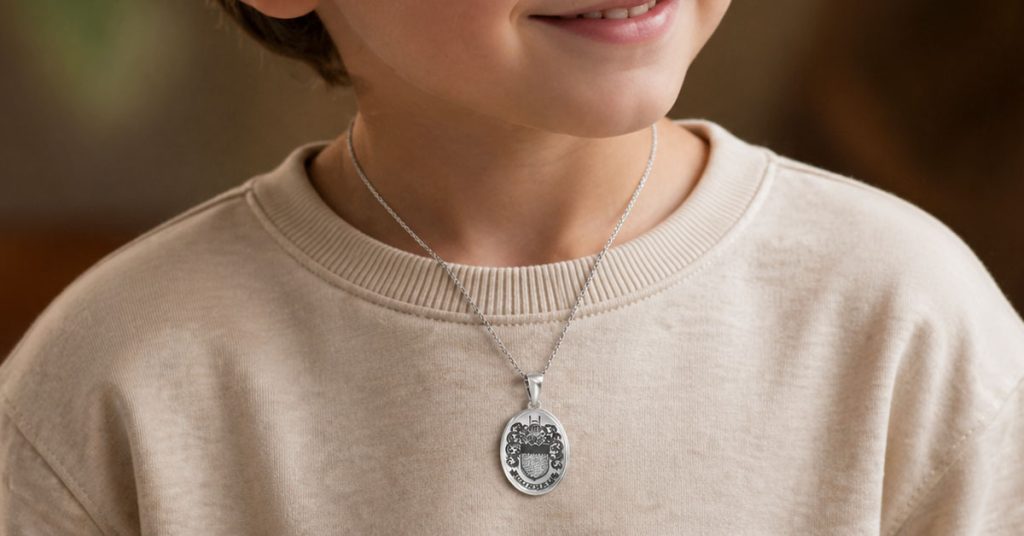
Silver family crest pendants are more than decorative jewelry. They carry historical meaning tied to specific family lines. However, not every pendant on the market reflects true heraldry.
Many sellers offer generic designs based only on surnames. That approach ignores how crests actually work. In reality, a legitimate coat of arms belongs to a specific lineage—not everyone with the same last name.
Therefore, accuracy matters from the start.
Key Differences in Silver Family Crest Pendants
| Feature | Custom Silver Pendant | Mass-Produced Pendant |
|---|---|---|
| Crest Accuracy | Based on verified heraldry | Generic surname database |
| Manufacturing | Individually handcrafted | Bulk production |
| Material | Sterling silver (.925) disclosed | Often unclear or plated |
| Detail Quality | Sharp engraving or raised detail | Simplified features |
| Longevity | Built for long-term wear | Shorter lifespan |
| Customization | Full design control | Limited or none |
Why Material Matters in Silver Pendants
Sterling silver (.925) remains one of the most trusted materials in jewelry. It offers a balance of durability, brightness, and value. However, not all “silver” pendants are equal.
Some products use thin plating over base metals. As a result, they wear down quickly. In contrast, solid sterling silver maintains its structure over time.
Additionally, transparency is critical. Many companies avoid clearly stating material composition. In contrast, manufacturers focused on quality disclose exactly what you are buying.
Types of Silver Family Crest Pendant Designs
Design style affects both appearance and function. Therefore, understanding the differences helps you choose correctly.
Raised Traditional Style
Raised designs sit above the surface. They create depth and visual contrast. Because of this, they are often easier to read and more visually striking.
Engraved New Style
Engraved pendants carve the crest into the surface. This creates a clean and refined look. However, detail depends heavily on craftsmanship.
Reversed Old Style
Reversed designs are engraved backward. Historically, they were used as seals. When pressed into wax, the image appears correctly oriented.
That distinction still matters today, especially for collectors and traditionalists.
Oval vs Antique Shapes: What’s the Difference?
Shape is not just aesthetic—it influences how the crest is presented.
Oval pendants offer a smooth, continuous outline. Therefore, they emphasize symmetry and simplicity.
Antique shapes, however, feature slightly squared edges with rounded corners. This creates a more traditional and historical appearance.
Choosing between them depends on personal preference and intended use.
Why Most Silver Family Crest Pendants Are Inaccurate
Here’s the uncomfortable reality: most pendants sold online are not historically correct.
Many companies rely on bulk crest databases. These assign the same design to thousands of people. However, heraldry does not work that way.
Additionally, mass production limits detail. Small elements get simplified or removed. Over time, the meaning behind the crest becomes diluted.
As a result, buyers often end up with decorative jewelry—not authentic family symbols.
The Role of Manufacturing in Quality
Manufacturing method directly affects the final product. This is where many buyers overlook critical differences.
Mass-produced pendants prioritize speed and cost. Therefore, detail and durability suffer.
In contrast, individually handcrafted pieces allow for precision. Every line, symbol, and proportion can be controlled.
This approach leads to stronger structure and sharper detail. Moreover, it ensures the pendant feels substantial rather than hollow.
Why Direct Manufacturing Changes Value
Most jewelry companies operate as retailers. They source products, add markups, and limit customization.
However, direct manufacturers eliminate those layers. That shift changes both price and quality.
Buying directly from the source allows:
- Better material transparency
- More customization options
- Higher craftsmanship standards
- Reduced markup costs
As a result, buyers receive more value without sacrificing quality.
How to Choose the Right Silver Family Crest Pendant
Choosing correctly requires more than picking a design. You need to evaluate multiple factors.
First, verify the crest source. Without this, the pendant has no historical value.
Next, check the material. Solid sterling silver should be clearly stated.
Then, examine the manufacturing process. Handcrafted pieces typically offer better detail.
Finally, consider design style. Raised, engraved, or reversed options each serve different purposes.
Most importantly, ask whether the piece represents your actual lineage—or just a generic version.
Real-World Buying Insight
If a pendant is cheap and widely available, it is likely mass-produced. That alone should raise questions.
Authentic family crest jewelry requires research, design work, and careful manufacturing. Therefore, it cannot be treated as a commodity.
Buyers who prioritize accuracy and craftsmanship tend to keep these pieces for life. Others often replace lower-quality versions within a few years.
That difference defines long-term value.
FAQs
Are silver family crest pendants historically accurate?
What is the best material for a family crest pendant?
Sterling silver (.925) is a strong choice. It offers durability, brightness, and long-term wear. However, solid construction matters more than plating.