What Is a Family Crest Ring?
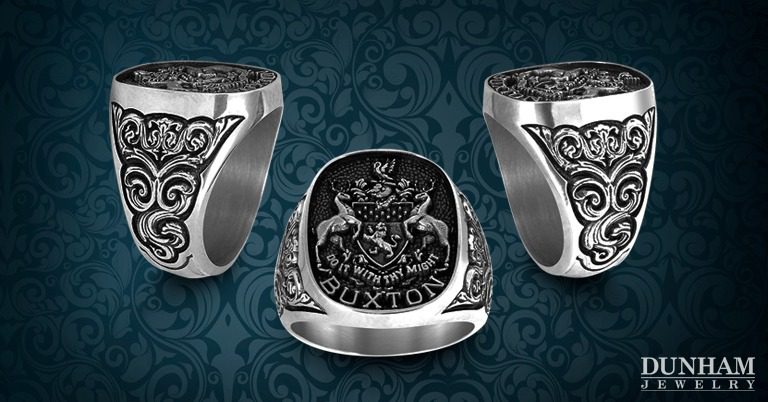
A family crest ring is a type of signet ring engraved with a family’s unique crest or coat of arms. It represents heritage, lineage, and identity. Historically, it was used as a personal seal for authenticating documents, while today it serves as a lasting symbol of family pride and tradition.
The Historical Purpose of a Family Crest Ring
Originally, family crest rings functioned as legal tools rather than decorative jewelry. Nobility, military leaders, and officials pressed engraved rings into hot wax to seal letters and contracts. As a result, the design was carved in reverse so the wax impression appeared correctly.
Over time, literacy increased and paper signatures replaced wax seals. However, the ring itself endured. It shifted from a functional object to a powerful symbol of authority, ancestry, and continuity across generations.
What a Family Crest Represents
A family crest is not random decoration. Instead, it is a structured system of symbols that tell a story. Animals often reflect virtues such as courage or loyalty, while colors indicate values like honor or sacrifice. Additionally, shields, helmets, and mottos provide insight into a family’s historical role or achievements.
Because of this, wearing a family crest ring is a way of carrying family history forward in a visible and meaningful form.
Family Crest Ring vs. Coat of Arms Ring
These terms are often used interchangeably, yet there is a technical distinction. A coat of arms includes the full heraldic achievement, such as the shield, helmet, crest, and motto. Meanwhile, a family crest traditionally refers only to the element that sits atop the helmet.
In modern jewelry, however, most “family crest rings” feature the full coat of arms. Therefore, both terms typically describe the same finished product when ordering a custom ring today.
Traditional vs. Modern Engraving Styles
Engraving style determines both appearance and function. Traditional seal engraving is carved deeply and in reverse, allowing the ring to create a proper wax seal. In contrast, modern engraving is cut in the correct visual orientation, prioritizing wearability over sealing use.
Consequently, buyers should decide whether historical accuracy or everyday aesthetics matter more. This choice affects depth, orientation, and long-term durability of the design.
Common Shapes and Ring Styles
Family crest rings are most often oval, round, or antique-style rectangular shapes. Oval styles are classic and closely tied to European heraldic tradition. Antique styles, on the other hand, feel bolder and more architectural due to their squared outline with softened corners.
Although pinky rings are traditional, modern wearers choose any finger that suits their comfort or style. Flexibility has become the norm rather than the exception.
Materials Used in Family Crest Rings
Material choice impacts longevity, appearance, and symbolism. Gold remains the most traditional option, offered in yellow or white and various karats. Sterling silver provides a more accessible entry point, while specialty alloys like Palisil offer durability and distinctive color tones.
Regardless of metal, weight and engraving depth matter. A properly made crest ring should feel substantial, not hollow, ensuring it lasts for generations.
Craftsmanship and Why It Matters
Not all family crest rings are created equal. Mass-produced rings often rely on shallow machine engraving, which loses detail over time. In contrast, hand-engraved rings preserve sharp lines and heraldic accuracy.
At Dunham Jewelry Manufacturing, Inc., each family crest ring is manufactured and finished by hand, one at a time. As a result, every piece meets strict standards for material integrity, engraving depth, and long-term wear.
Family Crest Rings as Heirlooms
Because these rings represent lineage, they are often passed down through generations. Over time, they accumulate meaning beyond their material value. Scratches become stories, and the ring itself becomes a physical connection between past, present, and future family members.
Therefore, investing in quality craftsmanship is not optional. A true heirloom must be built to endure decades of wear without losing its definition.
Family Crest Rings vs. Pendants
Some families prefer pendants over rings for daily wear. Pendants offer greater surface area and can display more intricate heraldic details. Rings, however, remain the most traditional format due to their historical use as seals.
Ultimately, the choice depends on lifestyle and preference. Both formats preserve symbolism, provided the engraving is executed correctly.
Industry Comparison Table
| Feature | Traditional Crest Ring | Modern Crest Ring |
|---|---|---|
| Engraving Orientation | Reversed (mirror) | Correct visual |
| Wax Seal Function | Yes | No |
| Engraving Depth | Deep hand-cut | Shallow to medium |
| Best Use | Historical authenticity | Daily wear |
| Typical Buyer | Collectors, historians | Families, modern wearers |
| Durability | Extremely high | Varies by maker |
Frequently Asked Questions
What Is a Family Crest Ring used for today?
Today, a family crest ring is worn as a symbol of heritage and family pride. While it once authenticated documents, it now serves as meaningful jewelry and a personal heirloom.
Can anyone wear a family crest ring?
Yes, provided the crest is historically accurate to your family lineage. Many jewelers can help verify or research proper heraldic use before engraving.
Are family crest rings still used as wax seals?
Traditional seal-engraved rings can still be used for wax seals. However, most modern rings are designed for appearance rather than sealing.
Which finger should a family crest ring be worn on?
Traditionally, it is worn on the pinky of the non-dominant hand. Modern customs allow any finger that feels comfortable or stylistically appropriate.
How long does a custom family crest ring last?
When properly crafted and engraved deeply, a family crest ring can last multiple generations with minimal loss of detail.
Final Thoughts on Family Crest Rings
A family crest ring is not fashion jewelry. It is historical identity made wearable. When designed correctly, it carries symbolism, craftsmanship, and personal meaning that few other pieces can match. For families who value heritage, few investments are as lasting or as powerful.
Post Views: 41