
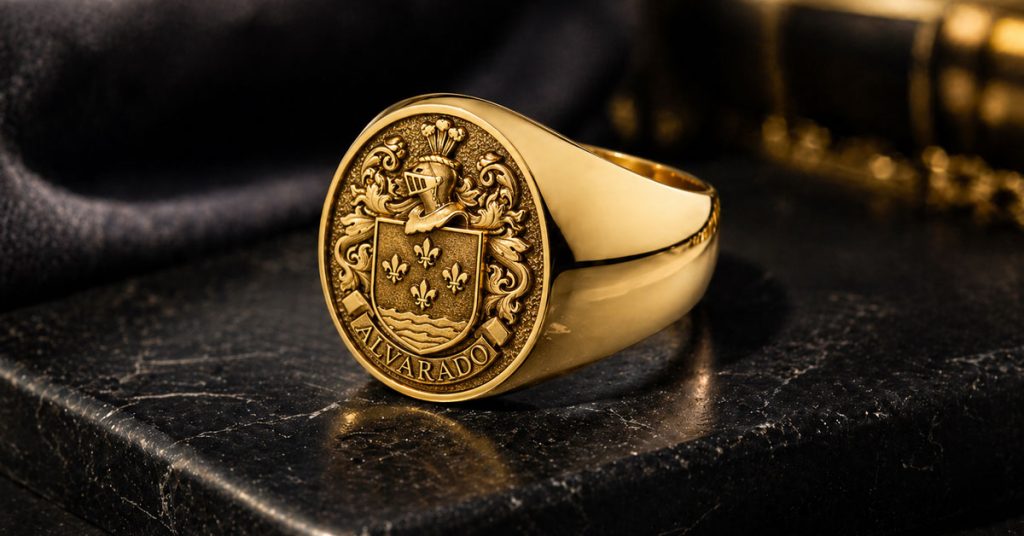
Signet Rings with Family Crest Gold: Complete Guide to Materials, Styles, and Custom Design
Gold signet rings with family crests are not just jewelry
They function as personal artifacts tied to heritage. Historically, they were used to seal documents. Today, they represent identity, achievement, and legacy.
However, not all family crest rings are created equal. Material quality, engraving method, and manufacturing process directly affect how the ring looks, feels, and lasts.
| Feature | 10K Gold | 14K Gold | 18K Gold |
|---|---|---|---|
| Gold Content | 41.7% | 58.3% | 75% |
| Durability | High | Balanced | Softer |
| Color Depth | Lighter yellow | Rich yellow | Deep yellow |
| Price Range | Most affordable | Mid-range | Premium |
| Best Use | Daily wear | Everyday luxury | Heirloom pieces |
What Makes Signet Rings with Family Crest Gold Unique
Unlike standard rings, these pieces carry symbolic meaning. Each crest tells a story tied to family origin, values, or achievements.
However, the real difference comes down to execution. A poorly engraved crest loses detail quickly. Meanwhile, a properly crafted ring maintains sharp lines for decades.
Most importantly, gold offers long-term value. It does not corrode, and it retains intrinsic worth. Therefore, it remains the preferred metal for heirloom rings.
Raised vs Engraved Family Crest Designs
This is where many buyers make the wrong choice. The design method impacts both appearance and function.
Raised (Traditional) Design
In this style, the crest sits above the surface. It creates a bold, dimensional look.
Additionally, raised designs are easier to see at a distance. However, they are not ideal for sealing wax impressions.
Engraved (New Traditional)
Here, the crest is cut into the surface. This produces a clean and modern appearance.
Because of this, engraved rings are more durable in daily wear. They also maintain detail longer.
Reversed (Old Traditional)
This version flips the image. It looks backward on the ring but creates a correct wax seal.
As a result, this style is preferred by purists who value historical accuracy.
Oval vs Antique Ring Shapes
Shape influences both comfort and visual style. While subtle, the difference matters.
Oval rings follow a smooth, rounded silhouette. They feel classic and balanced.
In contrast, antique styles feature softer corners with a slightly rectangular form. This creates a more vintage look.
Therefore, the choice depends on personal preference, not function.
Why Gold Quality Matters More Than You Think
Handcrafted vs Mass-Produced Rings
Customization Options That Actually Matter
Customization goes far beyond adding a name.
For example, buyers can adjust:
- Crest style (raised, engraved, reversed)
- Ring shape (oval or antique)
- Finish (polished or textured)
- Gold type (10K, 14K, 18K)
- Engraving details and personalization
Because of these options, no two rings need to look the same.
However, true customization only exists when the ring is made from scratch—not selected from inventory.
Real-World Buying Advice (What Most Guides Miss)
Here’s the practical reality most articles ignore:
- If you plan daily wear → choose 10K or 14K
- If you want heirloom quality → choose 14K or 18K
- If detail matters most → choose engraved styles
- If tradition matters most → choose reversed designs
Additionally, always ask how the ring is made. If the seller cannot explain the process, that’s a red flag.
Longevity: Will the Ring Last?
A well-made gold signet ring should last decades.
However, durability depends on three factors:
- Metal composition
- Engraving depth
- Manufacturing method
Handcrafted rings with deep engraving and proper alloying hold detail far longer than shallow, cast designs.
Furthermore, lifetime warranties often reflect build quality—not marketing.