What Are Common Materials for University Class Rings?
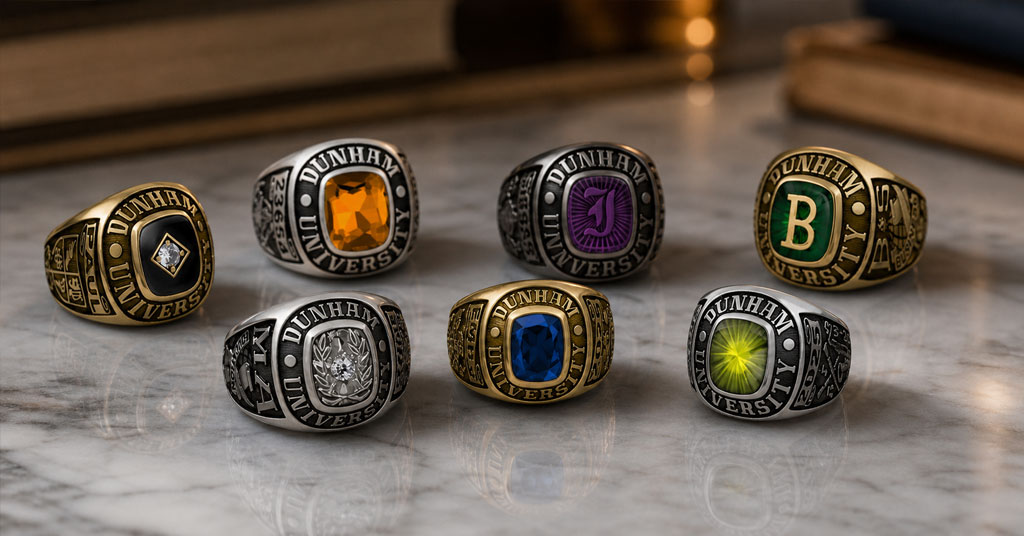
University class rings are typically made from metals like gold (10K, 14K, 18K), sterling silver, and modern alloys. Additionally, some manufacturers offer alternative materials such as gold-plated alloys or lower-karat gold options. Each material differs in durability, price, appearance, and long-term value.
Understanding Why Material Choice Matters
Material is not just about appearance. It directly affects durability, cost, and lifespan. Therefore, choosing the wrong metal can lead to wear issues or unnecessary expense.
Most buyers focus on looks first. However, long-term performance matters more. A ring is worn daily, not stored away.
Additionally, different metals behave differently over time. Some scratch easily, while others hold structure better. As a result, understanding material types is critical before buying.
Common Materials Used in University Class Rings
Below is a clear comparison of the most common materials used today:
| Material Type | Durability | Price Range | Resizable | Appearance | Best For |
|---|---|---|---|---|---|
| Palisil Alloy | High | Low | No | White gold look | Budget buyers |
| Yellow Gold-Plated | Medium | Low | No | Bright gold | Occasional wear |
| Black Alloy Finish | Medium | Low | No | Gunmetal modern | Style-focused buyers |
| Questra (6K Gold) | Medium | Mid | Yes | Light gold | Budget gold option |
| Sterling Silver | Medium | Mid | Yes | Bright white | Classic look |
| 10K Gold | High | Mid-High | Yes | Warm gold | Daily wear |
| 14K Gold | Very High | High | Yes | Rich gold | Long-term durability |
| 18K Gold | Medium | Premium | Yes | Deep gold | Luxury buyers |
Gold: The Traditional Standard
Gold remains the most recognized class ring material. However, not all gold is the same.
10K gold contains more alloy metals. Therefore, it is stronger and more resistant to wear. It is often the best balance of durability and cost.
In contrast, 14K gold offers better color while maintaining strength. As a result, it is one of the most popular choices for long-term wear.
Meanwhile, 18K gold has a richer color. However, it is softer. This makes it more prone to scratches.
Most importantly, gold rings can be resized. That flexibility matters over time.
Sterling Silver: A Classic Alternative
Sterling silver is widely used because it offers a bright, clean look at a lower cost.
It contains 92.5% pure silver. Therefore, it is softer than gold but still durable enough for regular wear.
However, silver can tarnish. That means it requires occasional cleaning.
On the other hand, it remains a strong option for buyers who want a traditional look without the price of gold.
Modern Alloys: Practical and Affordable
Modern alloys have changed the class ring market. These materials offer durability at a lower cost.
For example, Palisil is designed to resemble white gold. However, it is far more affordable. It also resists wear well.
Black or plated alloys provide unique styles. However, they are not ideal for daily wear long term.
Additionally, most alloys cannot be resized. That limitation is often overlooked.
Still, they serve a purpose. They allow buyers to prioritize design over material cost.
Lower-Karat Gold Options: A Middle Ground
Some manufacturers offer lower-karat gold options, such as 6K gold alternatives.
These provide a gold appearance at a reduced cost. At the same time, they maintain some benefits of traditional gold.
Unlike plated options, these materials are solid. Therefore, they can often be resized.
However, color and value differ from higher-karat gold. Buyers should understand that distinction before choosing.
How Manufacturing Impacts Material Quality
Material alone does not determine quality. Manufacturing plays a major role.
Mass-produced rings often use shortcuts. As a result, even good materials can perform poorly.
In contrast, individually crafted rings maintain better structure and detail.
Additionally, direct manufacturers control alloy composition. That improves consistency and transparency.
Most importantly, handcrafted production leads to stronger settings and cleaner finishes.
Choosing the Right Material for Your Situation
There is no universal “best” material. The right choice depends on how the ring will be used.
For daily wear, durability matters most. Therefore, 10K or 14K gold is often the safest choice.
For budget-conscious buyers, alloys provide strong value. However, they come with limitations.
If long-term resizing is important, avoid non-resizable materials.
Also, consider lifestyle. Active individuals need stronger metals.
In the end, material should match both budget and expectations.
What Most Buyers Overlook
Many buyers focus only on price. That is a mistake.
They often ignore factors like resizing, wear resistance, and long-term value.
Additionally, some sellers do not clearly explain materials. This creates confusion.
Transparency matters. Knowing exactly what you are buying leads to better decisions.